
Writing under the Shepherd’s care
Thoughts for writers from Psalm 23

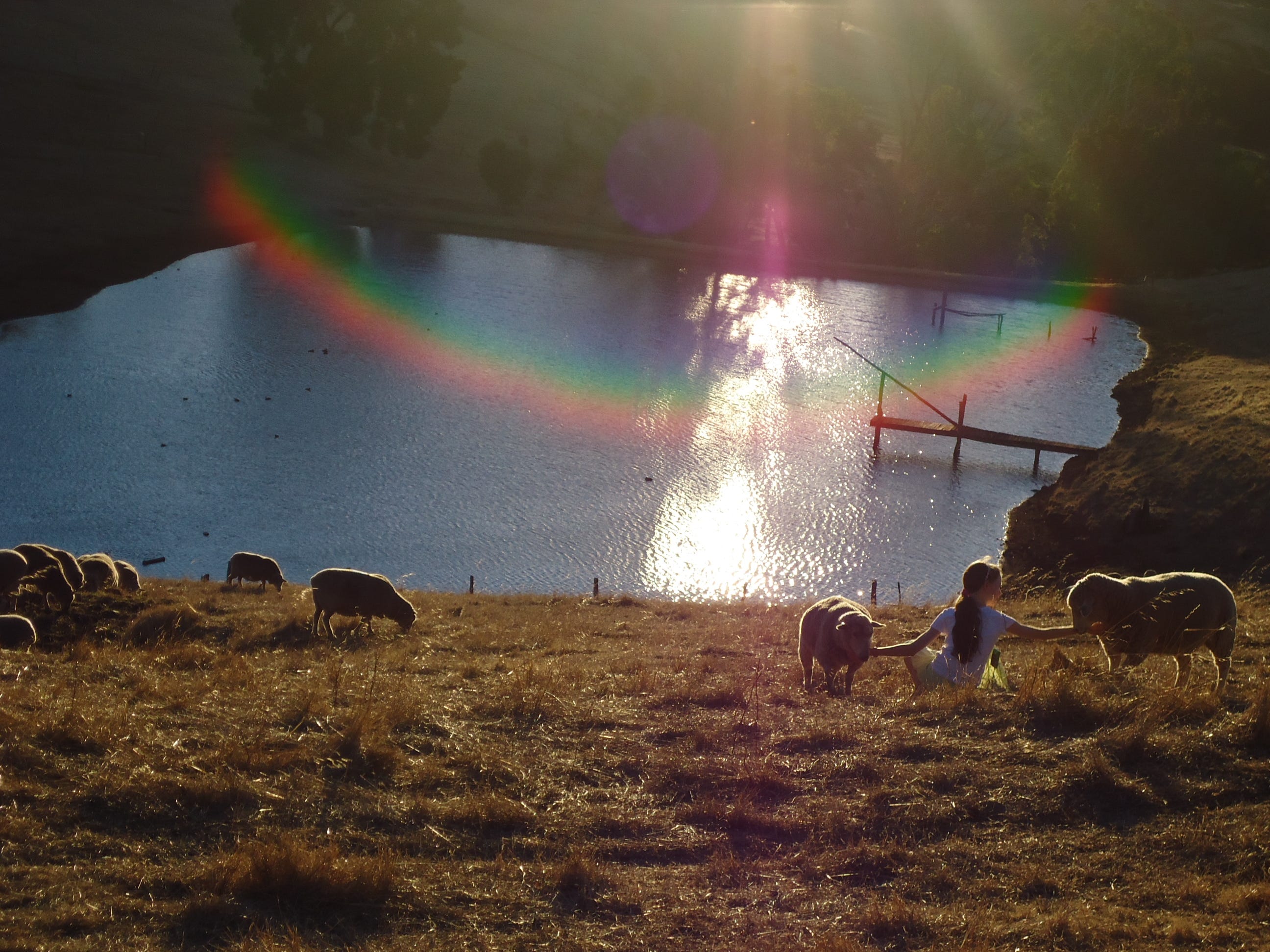
There are some passages of Scripture that are so familiar that we sometimes take them for granted.
For me, Psalm 23 is one of those passages.
I admit that I have often been guilty of rushing through this psalm and moving on to the next ones, simply because I know it so well.
But recently, I decided to go through it very slowly, one word at a time. Sure enough, there’s a treasure trove in those well-known lines that I never discovered before. (Don’t you love that about studying the Bible? It never gets old.)
The famous first line of the psalm is “The Lord is my shepherd; I shall not want.” (verse 1)
Why does the psalmist, King David, use the metaphor of a shepherd?
One obvious answer is that David was a shepherd himself. He could fully identify with this image.
Also, shepherds were an important part of Israelite society. Everyone knew what a shepherd was and what they did.
But as I studied this, I found that it goes so much deeper than that.
These are not, of course, simply David’s words. We remember that all Scripture is “breathed out” by God. (2 Timothy 3:16)
Therefore, this isn’t just a metaphor chosen by a human writer. God Himself is describing Himself as a shepherd.
The imagery is enhanced further in the book of Ezekiel where in a prophecy about Christ, Christ is described as the shepherd king. (Ezekiel 34, and 37)
And of course, in the gospels, Christ calls Himself the Good Shepherd (John 10).
In ancient Israel, the life of a shepherd was one of dedication to the sheep. The shepherd would stay with the sheep in all weathers. He would brave all kinds of terrain and conditions in order to ensure that the sheep were safe and well fed. He would guard and protect them from thieves and wild animals.
Isn’t it beautiful that the Creator of the universe compares himself to a shepherd?
I was thinking about how this psalm applies to the writing journey. Later in verse 4, it says, “thy rod and thy staff they comfort me.”
I’ve always associated the “rod and staff” verse with writing.
This is simply because I used to regularly use a book called the Rod and Staff Handbook, a grammar handbook.
But what does the shepherd do with his rod and staff?
He uses them to defend the sheep, and to discipline them if they go astray.
The writing journey is fraught with challenges.
Perhaps the greatest of them are those invisible enemies that threaten to keep us from writing. Doubts, fears, concerns - these kinds of enemies continually beset us. Even simple distractions can be a huge threat to our ability to write well.
But our Shepherd is with us and He can enable us to come even these seemingly “small” enemies.
Growing as a Christian writer means learning to depend on Christ more and more. Run to Him. Rely on Him as your shield and defender.
Our Shepherd also teaches us hard lessons, at times.
He uses our struggles, our mistakes, the difficult things that we learn from our various circumstances, to shape us and build us as people and as writers.
As the years have gone by, I have seen how my trials have had a deeply positive impact on the quality of both my fiction and non-fiction writing.
In his commentary on Psalm 23, Matthew Henry also points out that the rod was used to count the sheep (Lev 27:32). The image here is similar to what Jesus says in Luke 12:7 when He says that all the hairs on our head are numbered. He knows each of us individually and intimately.
He is writing your story. He has made you a certain way for a purpose. And He knows exactly what you need.
So, be encouraged today.
If you are a believer in Christ, the Lord is your Shepherd and you will not want.
Strive to fully grasp the deep meaning of those precious words.
Lean on Him. Trust Him as your portion, your shield, your guide.
Follow wherever He leads. I guarantee it will be an adventure!
And keep writing!
Christian Wordsmiths Fiction Corner
I love all kinds of writing, but fiction is an area that I am particularly passionate about. It’s also an area in which I have a lot of experience. That’s why I’ve created this “Fiction Corner” where I give you practical tips you can implement to improve your storytelling.
Something to try this week:
If you type your drafts (rather than writing them by hand) but struggle with writer’s block, try turning your text white so that you can’t see it.
It feels a bit crazy at first, but you may find (as I have) that it unlocks your creativity, subdues the perfectionist in you, and enables you to write much faster!
This is so encouraging.
I think the main problem most Christian writers face is whether all their writing should mention their faith, or some. (Am I even a Christian writer if I don't mention God?) However, it might be a major misconception. A job is a job, and I believe as long as we don't praise (in our writing) anything that goes against God's established moral order, a story might not even fall under the category of "Faith-based".
Been a follower for only a bit. This was beautiful and what I needed too reads.
Keep up the “good” work.